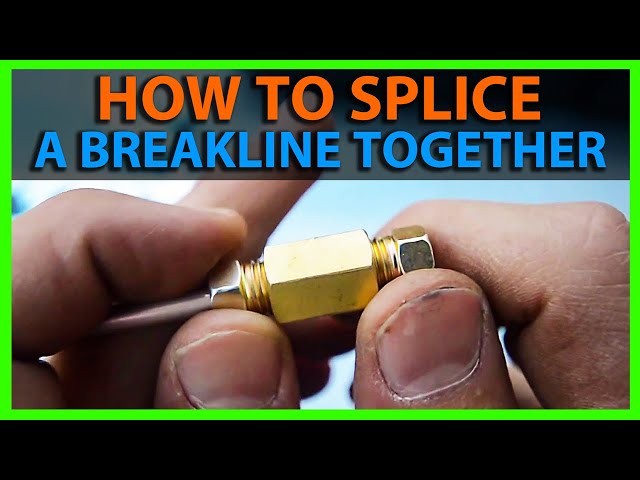

A rigid brake line may be repaired with a replacement section and correctly matched brake-line union only where the vehicle's service requirements and applicable rules permit that repair. It is not a universal alternative to replacing the complete line.
The retained tubing must be serviceable, and the replacement must match the required material, dimensions and connections. A leaking or cut line is not made safe by an improvised sleeve, rubber hose and clamps, tape or household sealant.
If the braking system is leaking, keep the vehicle out of use and arrange appropriate repair or recovery. This guide helps evaluate a proposed section repair rather than giving one splice procedure for every car.

Credit: www.pistonheads.com
First decide whether a section repair is supported
Identify the damaged route and obtain the service information for that application. Determine whether the manufacturer allows a sectional repair at that location and whether it specifies a repair assembly or connection method. Some situations require a complete line rather than another joint. Local inspection or repair requirements can also matter, so do not apply an internet claim about legality to every jurisdiction. If the permitted method is uncertain, ask the manufacturer, repair-information provider or a qualified repairer before cutting the line.
A union is a connection component, not authorization for the repair. A supplier may sell a correctly rated brake fitting while the vehicle procedure still requires a different repair scope. Keep these questions separate: is the fitting suitable for its intended job, and is this job permitted on the vehicle? A successful thread fit answers neither question by itself. The goal is a supported hydraulic assembly, not simply joining two pieces that can be pushed together.
Inspect beyond the visible leak before retaining old tubing
A local leak can be the visible part of wider deterioration. Inspect the accessible route, fittings and supports under the correct service conditions. HELLA’s line and hose guidance identifies corrosion and damage as relevant inspection concerns. The fact that one spot is wet does not establish that the rest is suitable to keep. Do not select a cut point solely because it is easy to reach.
- A sound repair needs an adequate length of serviceable tubing and the access required to prepare and support the connection correctly. Corroded, thinned, kinked or damaged retained tubing is not a reliable foundation for a new flare. Cleaning an exterior until it looks brighter does not establish its remaining integrity. The workshop should explain why the retained section is acceptable and which parts were inspected.
- If deterioration is widespread, a complete route replacement may be the supported decision. Ask for photographs and a clear scope explanation rather than assuming that a longer replacement is an unnecessary expense. Also identify why the original line failed. A rubbing point, missing support or unsuitable previous repair can damage a new section if left unchanged.
- Replacing only the wet segment may stop the immediate leak while preserving the cause. Inspect nearby components and the intended clearance. A line should not be stretched toward a new union or bent around an obstruction without regard to the specified route. Restoration includes support and protection, not just an apparently sealed connection.
Match the tube, flare and union as one connection system
AGS’s fitting-selection guidance calls for matching tube diameter, flare style and port, and explicitly excludes its standard brass compression unions from braking-system use. Do not confuse a general automotive fitting range with approval for every hydraulic circuit. For this repair, use the connection specifically supported by the vehicle and brake-line product instructions. A plumbing-style compression sleeve or a clamp around flexible tubing is not a substitute for an approved brake flare connection. The tube's outside diameter and the nut's thread are different specifications. Two fittings can share a thread while requiring different sealing seats.
- A nut can begin to screw into a port and still be the wrong connection. Identify the flare profile and mating seat as well as diameter, thread size and pitch. Our brake-line size guide separates those measurements. Use the actual service information and part identifiers rather than choosing the closest-looking item from a hardware assortment. AGS’s technical resources distinguish flare forms and fitting identification. That supports a central rule: recreate the specified connection rather than mixing shapes because they appear similar.
- Do not use an unsupported single flare where a different form is required. Do not try to make the wrong seat seal with extra tightening. A mismatched flare can be damaged even if it initially appears dry. The required tool and material combination must be confirmed before preparation begins. Access matters to the quality of the joint. The repairer needs room for the correct cutting, preparation and flaring equipment and for final inspection.
- A difficult location is not a reason to accept an off-center or poorly formed flare. Tool capability must match the tubing material and dimensions. A tool that works on one alloy is not automatically suitable for another. If the permitted connection cannot be prepared properly in place, the repair plan needs to change rather than the acceptance standard. Keep the hydraulic system clean during the work. Follow the procedure for protecting open connections and handling the specified fluid.
Debris from preparation must not be allowed to become part of the repaired circuit. Do not apply thread tape, general sealant or an adhesive to compensate for a damaged flare connection. The intended sealing arrangement must be restored. If a fitting or seat is damaged, identify the supported replacement rather than relying on a substance to fill the defect. The added connection also needs appropriate positioning and retention.
It must not be left to carry loads from a strained line or contact a moving or hot component. Match the intended routing and support requirements and assess the surrounding clearance. Avoid creating an unnecessary loop merely to use a preselected length. The replacement should fit the repair plan, not force the vehicle's route to fit a convenient piece of tubing. A qualified installer should be able to explain the chosen connection location and support.

Credit: www.youtube.com
Questions to settle before authorizing a splice
Can two sound brake-line sections be joined?
They can be joined only with a repair method supported for the application and the correct brake-line connection components. Ask which instruction permits the sectional repair, what tubing remains and how its condition was assessed. The answer should also identify the required union and flare. A statement that the shop has always done it that way is not a substitute for those details. If the complete line is specified for replacement, the availability of a union does not override that requirement.
What makes the finished connection acceptable?
The prepared ends must match the required form, fit the union without forced alignment and meet the specified installation requirements. The rest of the disturbed hydraulic system must then be restored and checked. A dry fitting at rest is not the whole test. Bleeding and any vehicle-specific procedures must be completed, followed by the prescribed leakage and functional checks. Do not treat one firm pedal press as proof that the entire repair is safe. If the connection leaks, stop and correct the cause rather than repeatedly tightening it beyond its specification.
What should happen after an accidental cut?
Treat an accidental cut as an open hydraulic-system fault, not a small cosmetic defect. Keep the vehicle out of use and identify the full repair requirements before proceeding. Explain how the damage occurred because nearby components may also need inspection. Do not bridge the gap with unapproved hose or cap the circuit to make the car movable under its own power. The workshop should select a complete line or permitted section repair, then restore and verify the system before return to service.
Why rubber hose and clamps are not a roadside substitute
A purpose-built brake hose assembly is different from a length of general hose held over cut metal ends with clamps. Its end connections, construction and application requirements form a complete product. Do not infer that the presence of flexible hoses elsewhere in the braking system makes a homemade splice equivalent.
Pressure, movement and sealing requirements cannot be verified by whether the improvised connection looks tight. No driveable temporary patch is recommended here. If the immediate problem is getting a stranded vehicle to a repairer, arrange recovery rather than constructing a hydraulic workaround.
Tell the operator that a brake line is damaged and braking may be impaired. The vehicle's condition determines the loading method. Do not assume it can safely be driven onto a carrier or around a parking area.
Our urgent brake-line problem guide addresses that triage decision separately. Before collection, obtain an itemized record identifying the repaired route, material, connection and completion checks. Ask whether other deterioration was found and how it was handled.
Keep any remaining advisories separate from the completed repair. A permitted section repair should be judged by the same standards of identification, workmanship and verification as a complete replacement. The useful question is not whether two tubes can physically be joined, but whether this vehicle has received the supported and fully verified repair its condition requires.


Automotive reference information. Confirm specifications in the manual for your exact vehicle. Original replacement guides link to their research sources. About us


